“Indian women are the backbone of their families but the most neglected when it comes to their own health. Every woman who tells me "I feel fine" — I test her anyway.”
— Truemark Health Editorial Team, Medically Reviewed by NABL-Certified Professionals
Why Women Need Different Health Screening
Women have unique health screening needs driven by hormonal cycles, pregnancy, menopause, and higher prevalence of certain conditions. Indian women face particularly high rates of anemia (57%), thyroid disorders (1 in 10 women), Vitamin D deficiency (up to 90%), and PCOS (1 in 5 women of reproductive age).
Despite this, Indian women are less likely to get regular health checkups than men. Cultural factors and caregiving responsibilities contribute to delayed diagnosis.
The tests every woman needs change with age and life stage.
Core Blood Tests for All Women
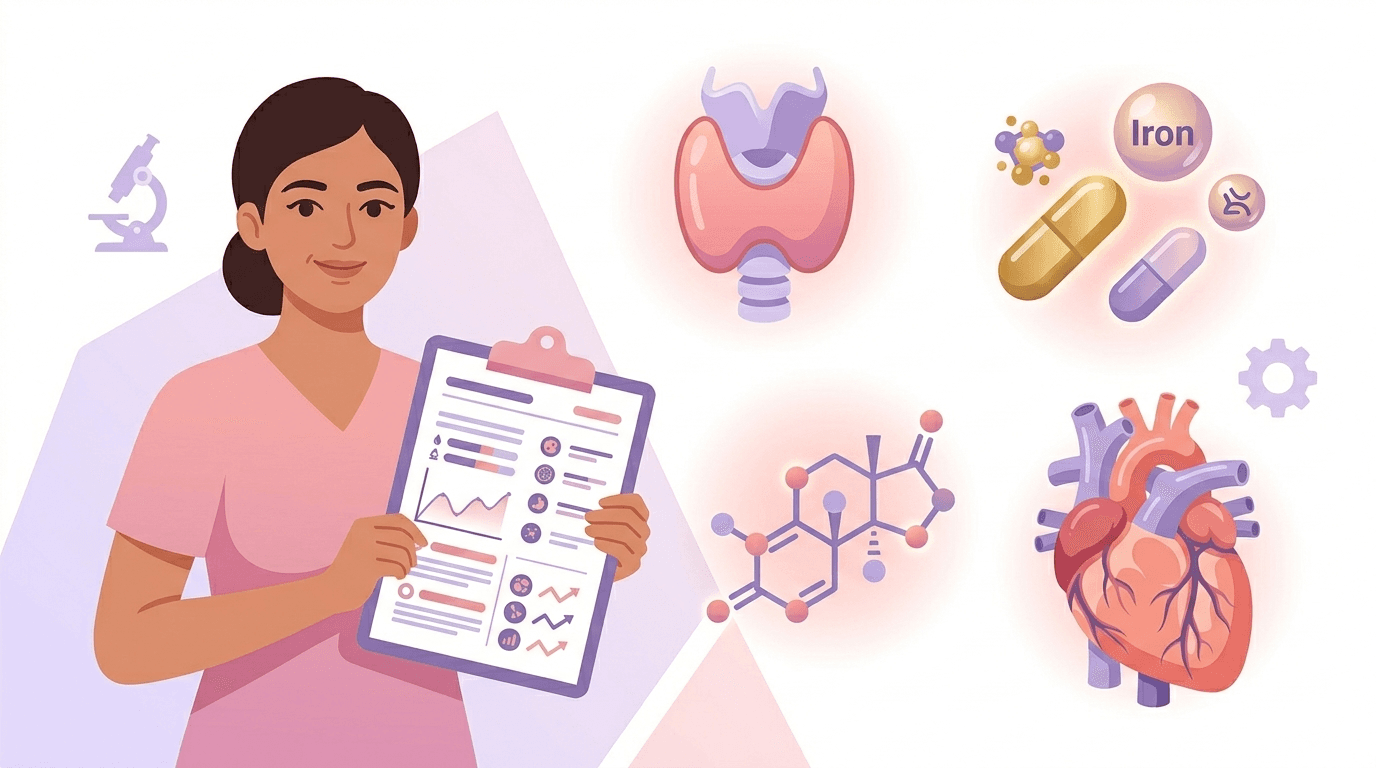
Regardless of age, every woman should annually check: CBC with iron studies — anemia screening is essential given India's 57% anemia rate among women. Thyroid panel (TSH, Free T4, Free T3) — thyroid disease is 5–8x more common in women.
Vitamin D and B12 — deficiency rates exceed 70% in Indian women. Fasting glucose and HbA1c. Lipid profile — heart disease is the #1 killer of Indian women.
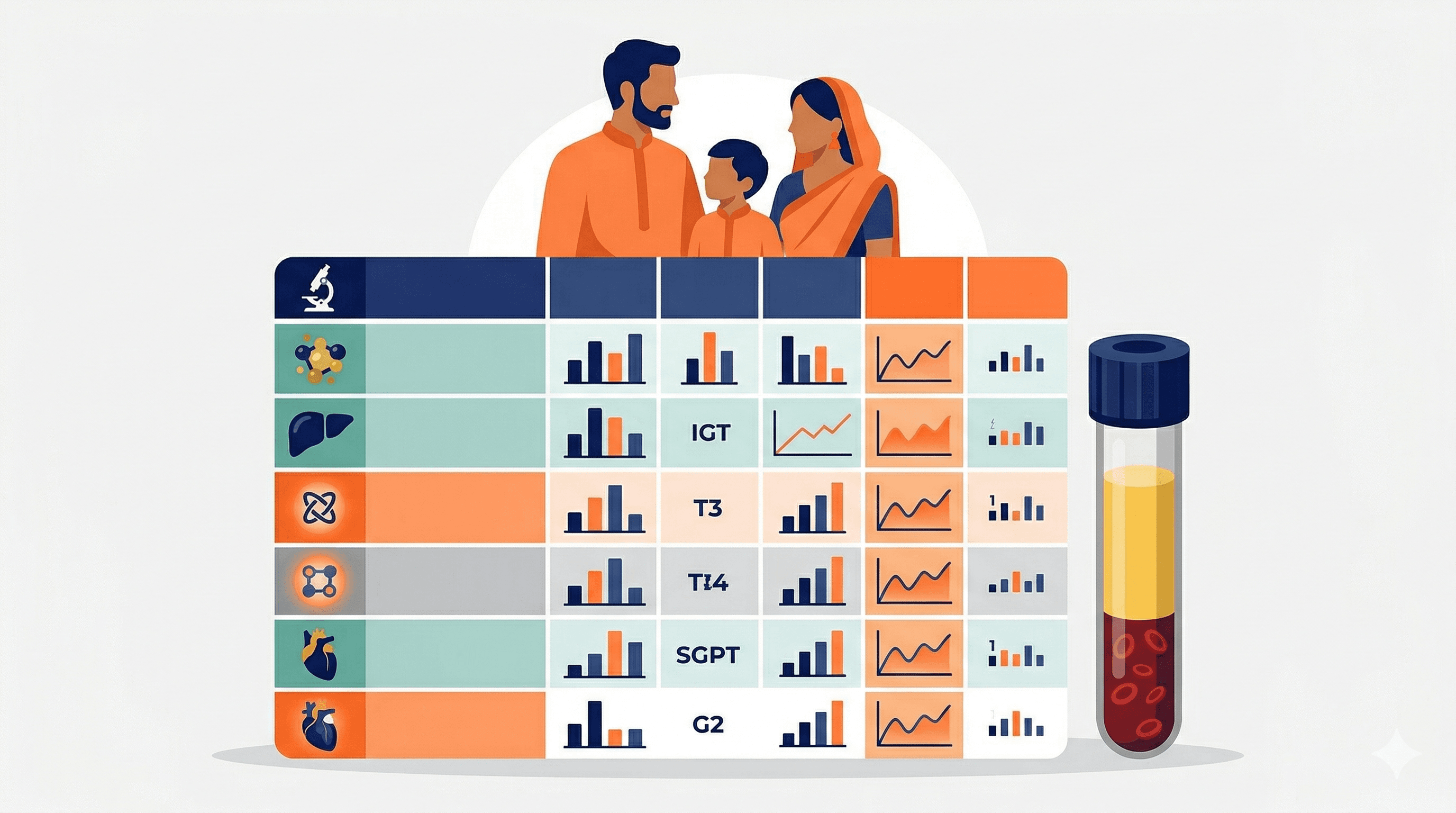
These 6 test panels cover the most common conditions affecting Indian women. Total cost: ₹1,500–₹3,000.
Age-Specific Screening for Women
20s: Core blood tests + Pap smear every 3 years. If irregular periods or acne, add hormonal panel for PCOS screening.
30s: Add complete metabolic panel, liver function, and anti-TPO antibodies. Women planning pregnancy: add rubella IgG, HIV, Hepatitis B.
40s: Add mammography (annual), bone density screening discussion, fasting insulin. 50s+: Add DEXA scan, FSH, comprehensive cardiac risk markers, and colonoscopy.
Pregnancy and Post-Partum Testing
During pregnancy: First trimester — CBC, blood group/Rh, TSH, fasting glucose, HIV, Hepatitis B. Second trimester — glucose tolerance test at 24–28 weeks. Third trimester — CBC, GBS screening at 35–37 weeks.
Post-partum: TSH at 6 weeks (post-partum thyroiditis affects 5–10% of women), CBC for anemia, fasting glucose if gestational diabetes was present.
Breastfeeding women should ensure adequate Vitamin D and B12 intake and consider testing at 3 months post-partum.
Frequently Asked Questions
What health tests should a 30-year-old Indian woman get?
How often should women check their thyroid?
Is a Pap smear really necessary?
What blood tests are needed before pregnancy?

Truemark Health Editorial Team
Medically Reviewed by NABL-Certified Professionals
The Truemark Health Editorial Team produces evidence-based health content reviewed against current clinical guidelines, ICMR standards, and peer-reviewed research. Every article is vetted for medical accuracy before publication.
View Medical Review Board →