“The CBC is the single most informative screening test we have. In India, where anemia affects over half the female population, I recommend every woman get a CBC at least twice a year.”
— Truemark Health Editorial Team, Medically Reviewed by NABL-Certified Professionals
What Is a CBC Test?
A Complete Blood Count (CBC) is one of the most commonly ordered blood tests in India and worldwide. It provides a comprehensive snapshot of your overall health by measuring the cellular components of your blood — red blood cells, white blood cells, and platelets.
Doctors routinely prescribe a CBC as part of annual health checkups, pre-surgical evaluations, and to investigate symptoms like fatigue, weakness, fever, or unexplained weight loss. The test is quick, requires only a small blood sample, and results are typically available within 24 hours.
A CBC can help detect a wide range of conditions including anemia, infections, blood cancers, clotting disorders, and immune system problems. It is often the first test ordered when a patient presents with non-specific symptoms.
The 14 Parameters Measured in a CBC
A standard CBC measures 14 key parameters grouped into three categories: Red Blood Cell (RBC) indices, White Blood Cell (WBC) counts, and Platelet indices.
RBC indices include Hemoglobin (Hb), Hematocrit (HCT/PCV), RBC Count, Mean Corpuscular Volume (MCV), Mean Corpuscular Hemoglobin (MCH), Mean Corpuscular Hemoglobin Concentration (MCHC), and Red Cell Distribution Width (RDW). These tell your doctor about oxygen-carrying capacity and the size and shape of your red blood cells.
WBC parameters include Total WBC Count and the differential count — Neutrophils, Lymphocytes, Monocytes, Eosinophils, and Basophils. These reveal how well your immune system is functioning. Platelet Count and Mean Platelet Volume (MPV) assess your blood's clotting ability.
CBC Normal Ranges for Indian Adults
Normal CBC values can vary slightly between laboratories, but the ranges listed below are standard reference intervals used by NABL-accredited labs in India. It is important to note that normal ranges differ between men and women, particularly for hemoglobin and RBC count.
Hemoglobin is the most commonly discussed parameter. In India, anemia is alarmingly prevalent — NFHS-5 data shows that 57% of women and 25% of men aged 15–49 are anemic. This makes hemoglobin monitoring especially critical for the Indian population.
Always compare your results against the reference range printed on your specific lab report, as altitude, age, and hydration status can influence values.
When Should You Get a CBC Test?
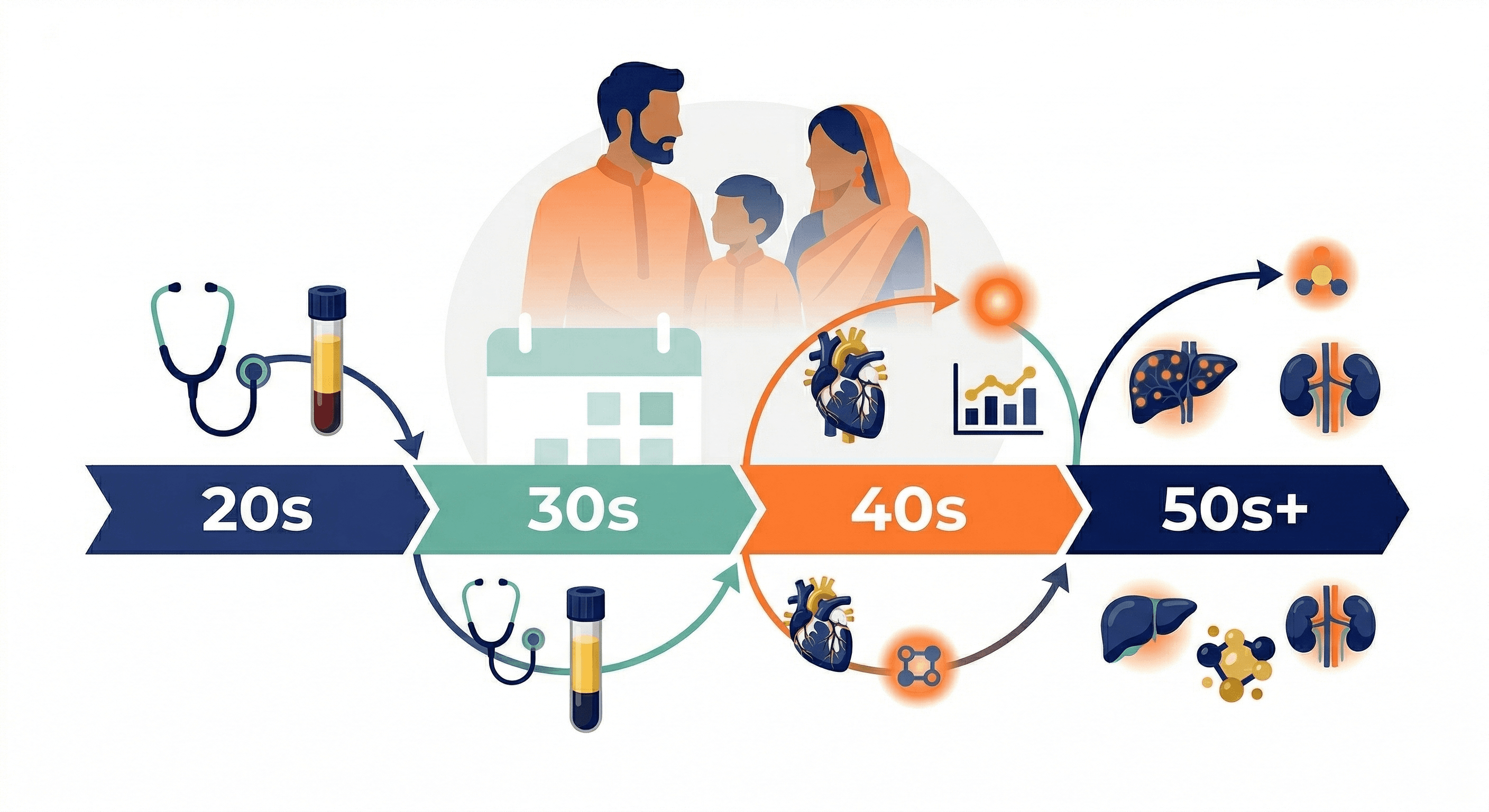
A CBC should be part of your annual health checkup regardless of age. Beyond routine screening, you should get a CBC if you experience persistent fatigue, unexplained bruising or bleeding, recurring infections, fever lasting more than a week, or unusual paleness.
Pregnant women need regular CBC monitoring — anemia during pregnancy is a leading cause of maternal morbidity in India. Similarly, patients on long-term medications (especially those affecting bone marrow) need periodic CBC monitoring.
If you have a chronic condition like diabetes, kidney disease, or an autoimmune disorder, your doctor will likely recommend CBCs every 3–6 months to track your blood health alongside your primary condition.
Understanding Abnormal CBC Results
An abnormal CBC does not automatically mean you have a serious condition. Many factors can temporarily alter your blood counts — dehydration, recent exercise, stress, medications, and even altitude.
Low hemoglobin (anemia) is the most common abnormality in Indian patients. Iron deficiency is the leading cause, followed by vitamin B12 and folate deficiency. A high WBC count often signals an active infection, while a very high count could indicate a blood disorder requiring further investigation.
Low platelet count (thrombocytopenia) is particularly relevant during dengue season in India. If your platelet count drops below 1,50,000/μL, your doctor may recommend monitoring and repeat testing.
Normal Range Reference Table
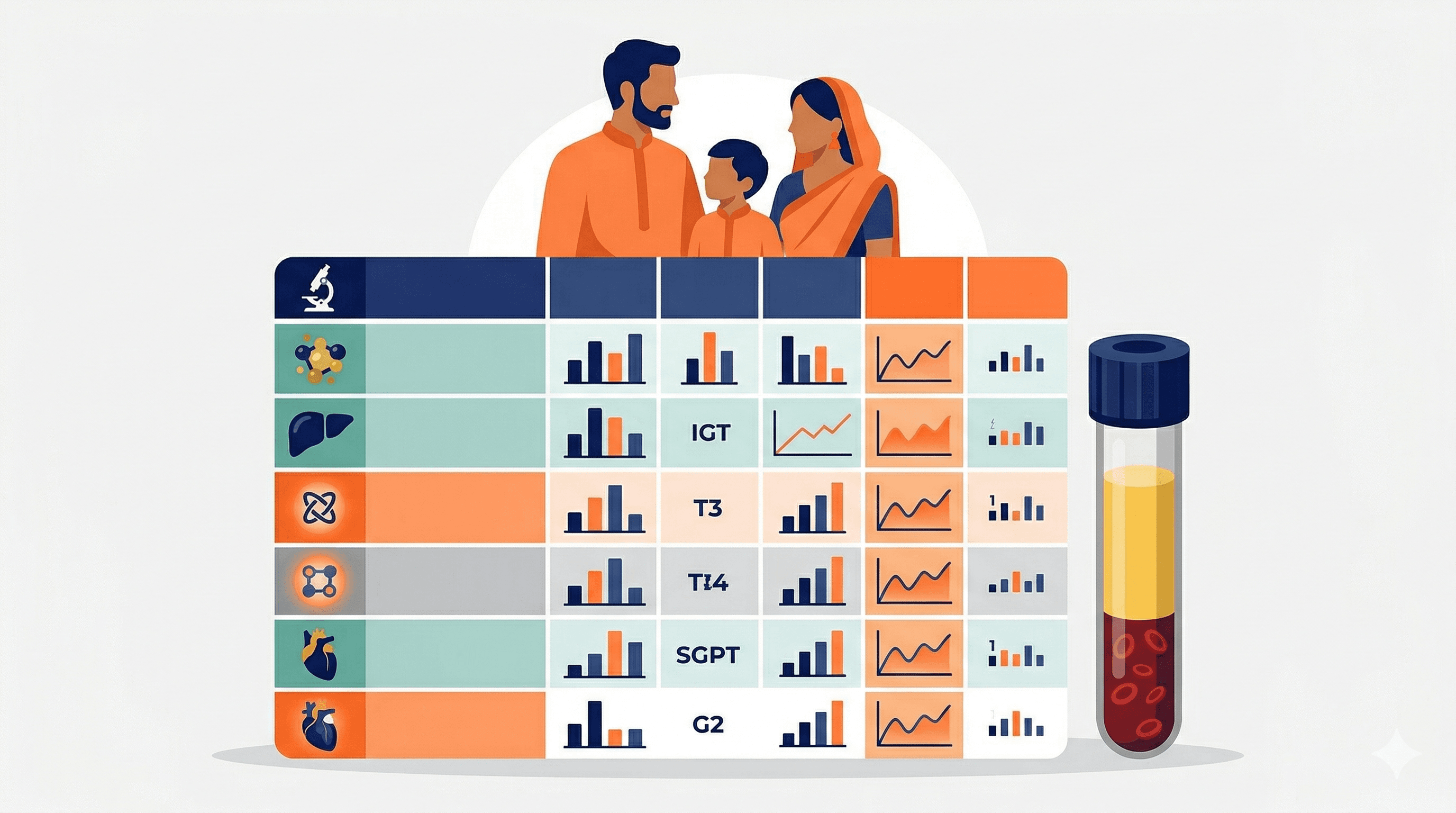
| Parameter | Normal Range | Unit | High Indicates | Low Indicates |
|---|---|---|---|---|
| Hemoglobin (Male) | 13.0–17.0 | g/dL | Polycythemia, dehydration | Anemia, blood loss |
| Hemoglobin (Female) | 12.0–15.5 | g/dL | Polycythemia | Anemia, iron deficiency |
| RBC Count (Male) | 4.5–5.5 | million/μL | Polycythemia vera | Anemia |
| RBC Count (Female) | 4.0–5.0 | million/μL | Polycythemia | Anemia |
| Hematocrit (Male) | 38–50 | % | Dehydration | Anemia |
| Hematocrit (Female) | 36–44 | % | Dehydration | Anemia |
| MCV | 80–100 | fL | B12/folate deficiency | Iron deficiency |
| MCH | 27–33 | pg | Macrocytic anemia | Microcytic anemia |
| MCHC | 32–36 | g/dL | Spherocytosis | Iron deficiency |
| RDW | 11.5–14.5 | % | Mixed anemia | Normal variant |
| Total WBC Count | 4,000–11,000 | /μL | Infection, inflammation | Bone marrow suppression |
| Platelet Count | 1,50,000–4,00,000 | /μL | Thrombocytosis | Dengue, ITP |
| Neutrophils | 40–70 | % | Bacterial infection | Viral infection |
| Lymphocytes | 20–40 | % | Viral infection | HIV, immunosuppression |
Hemoglobin (Male)
Hemoglobin (Female)
RBC Count (Male)
RBC Count (Female)
Hematocrit (Male)
Hematocrit (Female)
MCV
MCH
MCHC
RDW
Total WBC Count
Platelet Count
Neutrophils
Lymphocytes
Frequently Asked Questions
Is fasting required before a CBC test?
How much does a CBC test cost in India?
What does a low hemoglobin level indicate?
How often should I get a CBC test done?
Can a CBC test detect cancer?

Truemark Health Editorial Team
Medically Reviewed by NABL-Certified Professionals
The Truemark Health Editorial Team produces evidence-based health content reviewed against current clinical guidelines, ICMR standards, and peer-reviewed research. Every article is vetted for medical accuracy before publication.
View Medical Review Board →