“If every Indian knew their fasting insulin level, not just their fasting glucose, we could prevent half the diabetes cases in this country.”
— Truemark Health Editorial Team, Medically Reviewed by NABL-Certified Professionals
Why Catching Diabetes Early Changes Everything
India has 77 million diabetics and an estimated 25 million with pre-diabetes who do not know it. Pre-diabetes is the window of opportunity — lifestyle interventions can reduce diabetes risk by 58%.
Once diabetes is established, it requires lifelong management. Catching it early saves decades of medication and complications.
The problem: most doctors only check fasting glucose, the last marker to become abnormal. Smarter testing catches the problem 5–10 years earlier.
The 7 Essential Tests
1. HbA1c — The gold standard, reflects 3-month average blood sugar. Pre-diabetes: 5.7–6.4%. 2. Fasting Blood Glucose — Traditional test. Pre-diabetes: 100–125 mg/dL. 3. Post-Prandial Glucose — Tests sugar handling after eating. Pre-diabetes: 140–199 mg/dL.
4. Fasting Insulin — The early warning most doctors miss. High fasting insulin with normal glucose means insulin resistance is present. 5. HOMA-IR — Calculated from fasting insulin and glucose. Above 2.5 indicates insulin resistance.
6. C-Peptide — Measures pancreatic insulin production. 7. Triglyceride/HDL Ratio — Above 3.0 is a strong proxy for insulin resistance.
Pre-Diabetes Criteria
Pre-diabetes is defined by any ONE of: Fasting glucose 100–125 mg/dL, 2-hour post-prandial glucose 140–199 mg/dL, or HbA1c 5.7–6.4%.
Diabetes is diagnosed when: Fasting glucose ≥126 mg/dL (on two occasions), 2-hour post-prandial glucose ≥200 mg/dL, HbA1c ≥6.5%, or random glucose ≥200 mg/dL with symptoms.
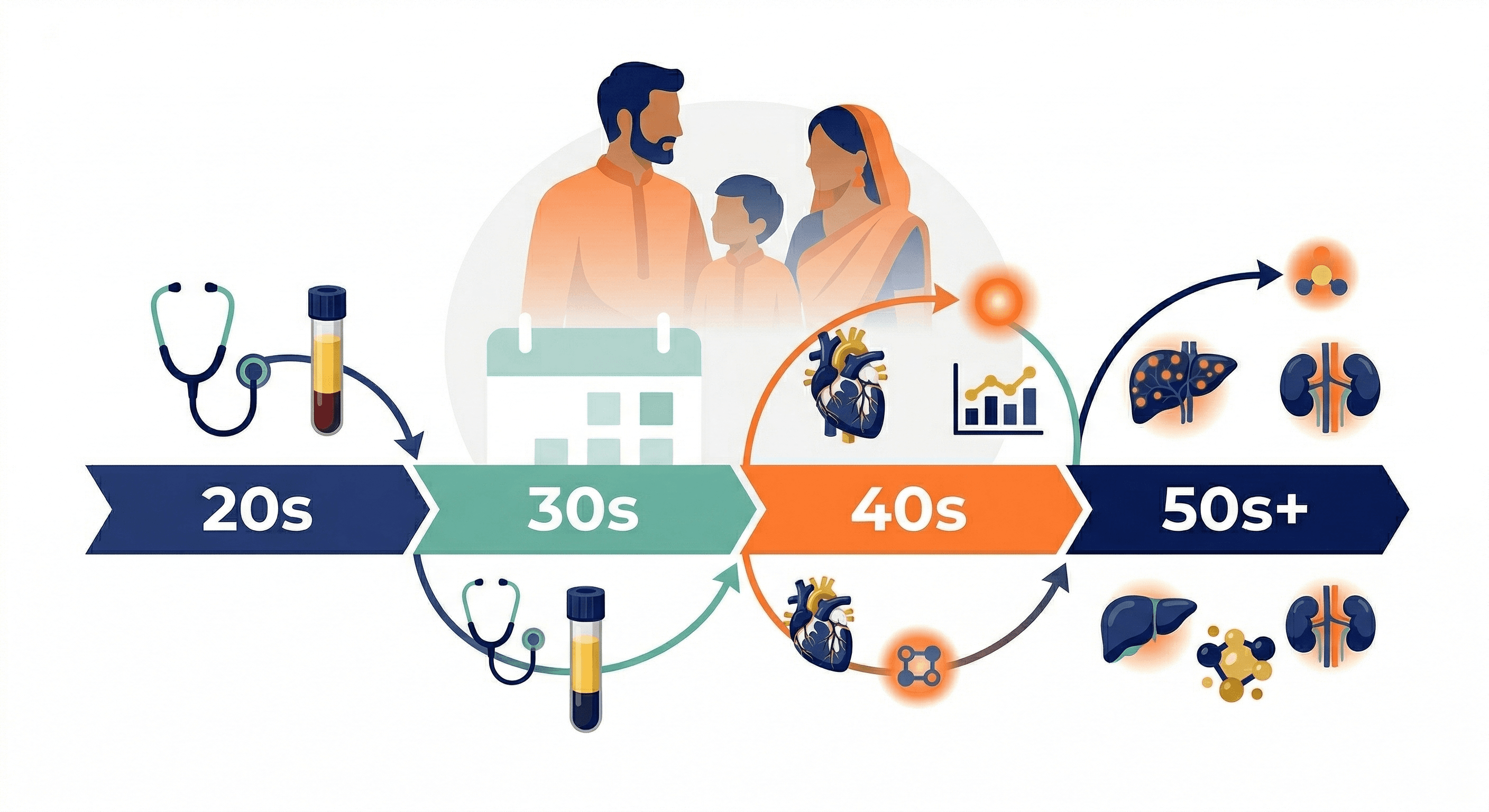
For Indians, the risk threshold is lower. Many Indian diabetologists recommend screening starting at age 30 and using BMI cutoff of 23 (vs 25 internationally).
Who Should Get Diabetes Screening
All Indians over 30 should be screened. Screen earlier if you have: family history of diabetes, BMI above 23, waist circumference above 90 cm (men) or 80 cm (women), history of gestational diabetes, PCOS, or sedentary lifestyle.
If fasting glucose is normal but you have risk factors, ask for fasting insulin and HbA1c. These catch insulin resistance years before glucose rises.
If you are pre-diabetic, get tested every 6 months to track your response to lifestyle changes.
Normal Range Reference Table
| Parameter | Normal Range | Unit | High Indicates |
|---|---|---|---|
| Fasting Glucose (Normal) | 70–99 | mg/dL | — |
| Fasting Glucose (Pre-Diabetes) | 100–125 | mg/dL | Impaired fasting glucose |
| HbA1c (Normal) | <5.7 | % | — |
| HbA1c (Pre-Diabetes) | 5.7–6.4 | % | High diabetes risk |
| Fasting Insulin | 2.6–24.9 | μIU/mL | Insulin resistance |
| HOMA-IR (Ideal) | <1.0 | index | — |
| HOMA-IR (Resistant) | >2.5 | index | Insulin resistance |
| Triglyceride/HDL Ratio | <3.0 | ratio | Insulin resistance proxy |
Fasting Glucose (Normal)
Fasting Glucose (Pre-Diabetes)
HbA1c (Normal)
HbA1c (Pre-Diabetes)
Fasting Insulin
HOMA-IR (Ideal)
HOMA-IR (Resistant)
Triglyceride/HDL Ratio
Frequently Asked Questions
Can pre-diabetes be reversed?
My fasting glucose is normal. Can I still be pre-diabetic?
At what age should Indians start diabetes screening?
What is HOMA-IR?

Truemark Health Editorial Team
Medically Reviewed by NABL-Certified Professionals
The Truemark Health Editorial Team produces evidence-based health content reviewed against current clinical guidelines, ICMR standards, and peer-reviewed research. Every article is vetted for medical accuracy before publication.
View Medical Review Board →