“The HbA1c is like a report card for your blood sugar control. In India, where diabetes is an epidemic, I urge every adult over 35 to know their HbA1c number — catching pre-diabetes early can prevent a lifetime of medication.”
— Truemark Health Editorial Team, Medically Reviewed by NABL-Certified Professionals
What Is the HbA1c Test?
The HbA1c test (also called glycated hemoglobin or A1c) measures the percentage of hemoglobin in your blood that has glucose attached to it. Since red blood cells live for about 120 days, the HbA1c reflects your average blood sugar control over the past 2–3 months.
Unlike fasting glucose which gives a single point-in-time reading, HbA1c provides a comprehensive view of your glycemic control. It is the gold standard test for diagnosing diabetes, monitoring treatment effectiveness, and predicting complication risk.
India is home to over 77 million diabetics — the second highest in the world. The HbA1c test is essential for every diabetic patient and anyone at risk of developing diabetes.
HbA1c Ranges: Normal, Pre-Diabetes, and Diabetes
The American Diabetes Association and Indian guidelines classify HbA1c levels as follows: Below 5.7% is normal, 5.7–6.4% indicates pre-diabetes, and 6.5% or above confirms diabetes.
For diagnosed diabetics, the target HbA1c is generally below 7.0%, though this may be individualized. Younger patients without complications may aim for below 6.5%, while elderly patients with multiple health issues may have a relaxed target of below 8.0%.
Every 1% reduction in HbA1c is associated with a 21% reduction in diabetes-related deaths, a 14% reduction in heart attacks, and a 37% reduction in microvascular complications like eye and kidney damage.
HbA1c to Average Blood Glucose Conversion
Your HbA1c percentage can be converted to an estimated Average Glucose (eAG) in mg/dL using the formula: eAG = (28.7 × HbA1c) – 46.7. This helps patients relate their HbA1c to the numbers they see on their glucometer.
For example, an HbA1c of 6.0% corresponds to an average glucose of about 126 mg/dL. An HbA1c of 7.0% equals approximately 154 mg/dL, and 8.0% equals about 183 mg/dL.
This conversion is valuable for patient understanding, but remember that HbA1c represents an average — it does not capture glucose variability or the frequency of highs and lows throughout the day.
Who Should Get an HbA1c Test?
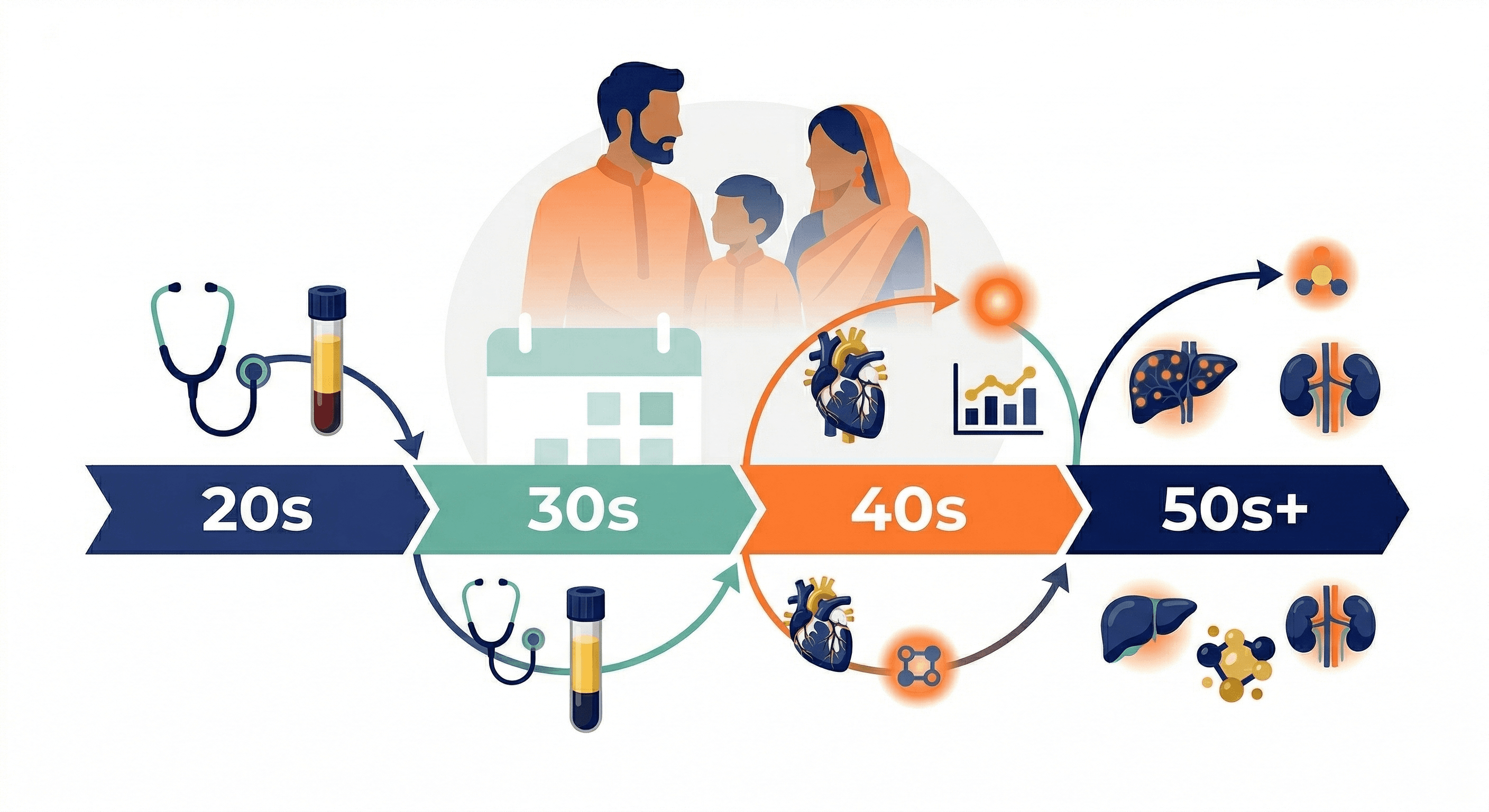
All adults over 45 should be screened with HbA1c at least once every 3 years. If you are overweight (BMI > 23 for Indians) with additional risk factors like family history, sedentary lifestyle, PCOS, or history of gestational diabetes, screening should start at age 30.
Diagnosed diabetics should get HbA1c tested every 3 months. If your diabetes is well-controlled and stable, testing twice a year may be sufficient. Your doctor will advise based on your treatment plan.
Pre-diabetics (HbA1c 5.7–6.4%) should be retested annually and should actively pursue lifestyle modifications — studies show that diet and exercise can reduce the risk of progressing to diabetes by 58%.
Normal Range Reference Table
| Parameter | Normal Range | Unit | High Indicates |
|---|---|---|---|
| HbA1c (Normal) | <5.7 | % | Pre-diabetes or diabetes |
| HbA1c (Pre-Diabetes) | 5.7–6.4 | % | High risk of diabetes |
| HbA1c (Diabetes) | ≥6.5 | % | Diabetes confirmed |
| HbA1c Target (Diabetics) | <7.0 | % | Poor glycemic control |
| eAG for HbA1c 5.7% | ~117 | mg/dL | — |
| eAG for HbA1c 6.5% | ~140 | mg/dL | — |
| eAG for HbA1c 7.0% | ~154 | mg/dL | — |
| eAG for HbA1c 8.0% | ~183 | mg/dL | — |
| eAG for HbA1c 9.0% | ~212 | mg/dL | — |
| eAG for HbA1c 10.0% | ~240 | mg/dL | — |
HbA1c (Normal)
HbA1c (Pre-Diabetes)
HbA1c (Diabetes)
HbA1c Target (Diabetics)
eAG for HbA1c 5.7%
eAG for HbA1c 6.5%
eAG for HbA1c 7.0%
eAG for HbA1c 8.0%
eAG for HbA1c 9.0%
eAG for HbA1c 10.0%
Frequently Asked Questions
Is fasting required for the HbA1c test?
How often should diabetics check HbA1c?
Can HbA1c be falsely high or low?
What is a good HbA1c level for a diabetic?
Can I reverse pre-diabetes?

Truemark Health Editorial Team
Medically Reviewed by NABL-Certified Professionals
The Truemark Health Editorial Team produces evidence-based health content reviewed against current clinical guidelines, ICMR standards, and peer-reviewed research. Every article is vetted for medical accuracy before publication.
View Medical Review Board →