“The best full body checkup is not the one with the most tests — it is the one with the right tests for your age, gender, and risk profile.”
— Truemark Health Editorial Team, Medically Reviewed by NABL-Certified Professionals
What Is a Full Body Checkup?
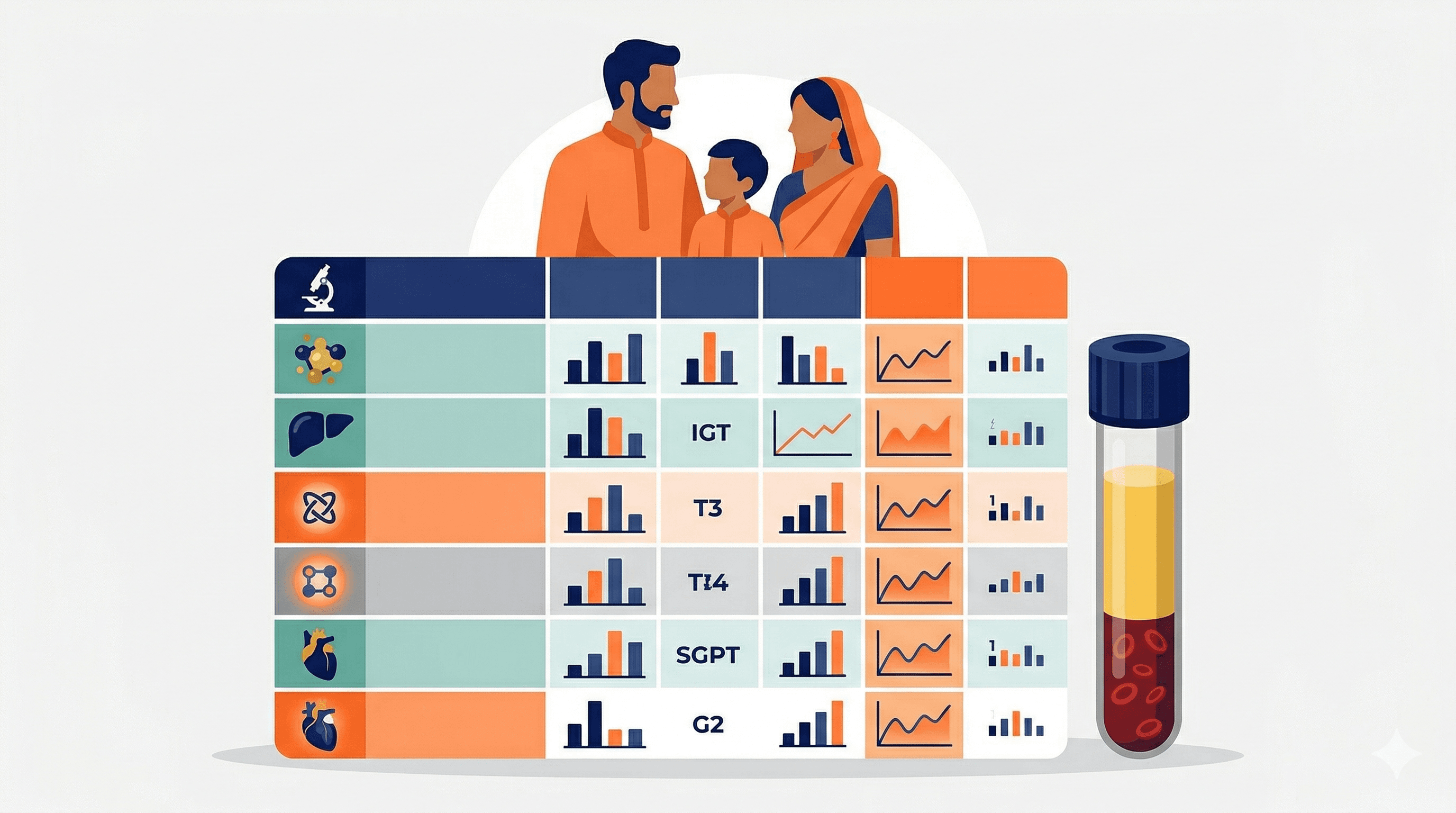
A full body checkup is a panel of blood tests designed to evaluate your overall health status. It screens for diabetes, heart disease, liver disease, kidney disease, thyroid disorders, anemia, and vitamin deficiencies.
The term "full body checkup" can be misleading as different labs include different test panels. A basic package may include 30–40 parameters, while a comprehensive package covers 80–100+ parameters.
Understanding what is included helps you make an informed choice based on your age, gender, risk factors, and budget.
Basic vs Comprehensive Packages
A basic full body checkup (₹999–₹1,999) usually includes: CBC, fasting glucose, lipid profile, liver function (SGPT, SGOT, bilirubin), kidney function (creatinine, urea), thyroid (TSH), and urine routine. About 40–50 parameters.
A comprehensive package (₹2,999–₹5,999) adds: HbA1c, iron studies, Vitamin D, Vitamin B12, complete thyroid panel, electrolytes, uric acid, calcium, and additional liver markers. Covers 70–100+ parameters.
Premium packages may additionally include cardiac risk markers (hs-CRP, homocysteine), hormonal panels, and cancer markers.
How to Choose the Right Package
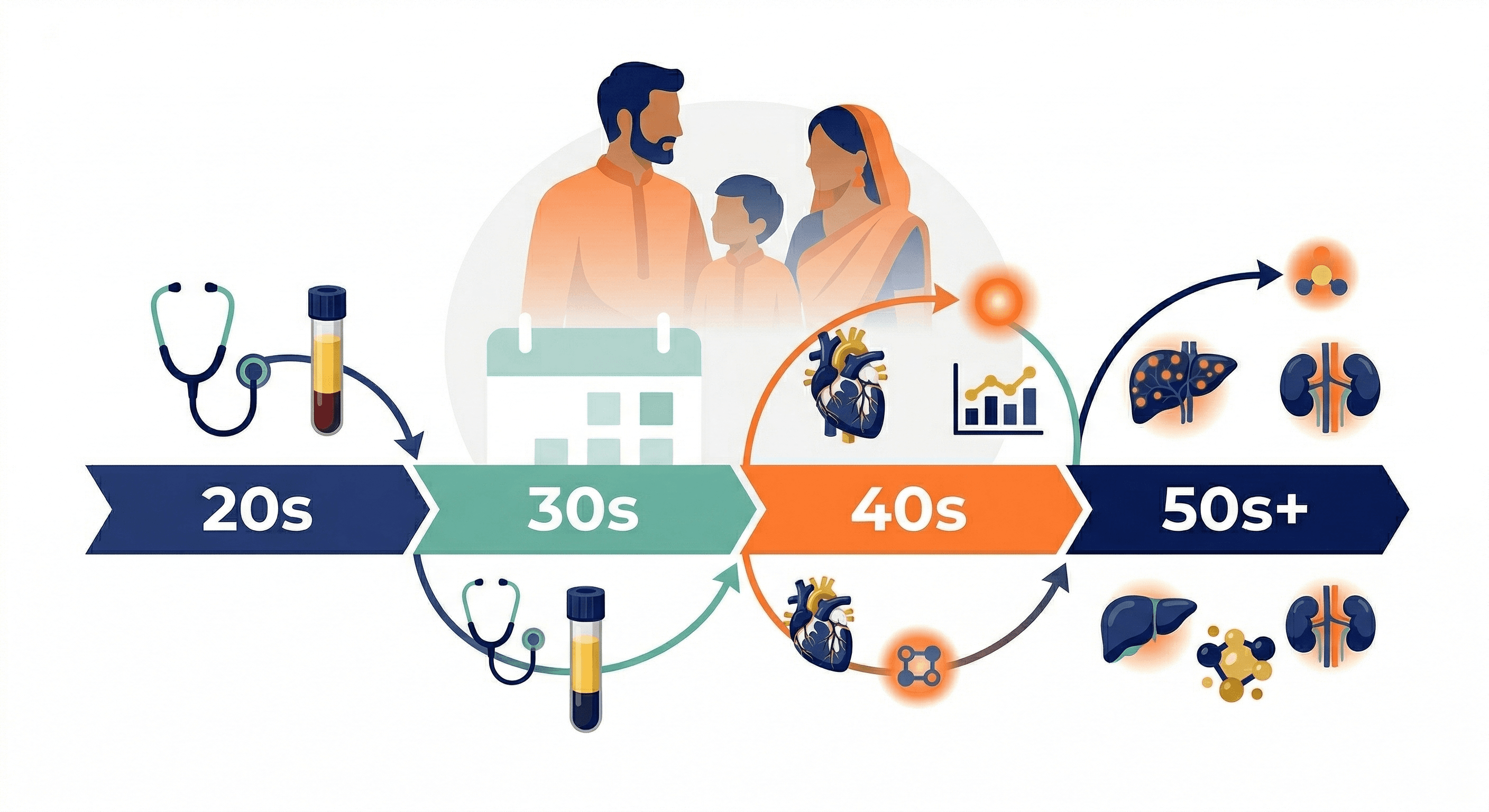
Your choice should be guided by age, gender, family history, and lifestyle. Under 30 with no risk factors: basic package. Over 30 or with risk factors: comprehensive package.
Women should ensure their package includes iron studies and thyroid panel. Men over 40 should look for packages including cardiac risk markers.
Do not be swayed by packages advertising "100+ tests" — the number matters less than which parameters are included. A 60-parameter panel with the right tests beats a 100-parameter one missing Vitamin D and HbA1c.
What to Do With Your Results
Do not just file away your report. Share results with a doctor who can interpret them in context of your overall health. Keep records over time — tracking trends is more valuable than single readings.
A fasting glucose of 95 mg/dL is "normal" but if it was 80 two years ago, the upward trend is a warning sign. If abnormalities are found, follow up promptly.
An abnormal HbA1c of 5.9% is an opportunity — lifestyle changes at this stage can prevent diabetes. Ignoring it guarantees progression.
Frequently Asked Questions
Is a full body checkup worth the cost?
Do I need to fast before a full body checkup?
Can I get a full body checkup done at home?
How often should I get a full body checkup?

Truemark Health Editorial Team
Medically Reviewed by NABL-Certified Professionals
The Truemark Health Editorial Team produces evidence-based health content reviewed against current clinical guidelines, ICMR standards, and peer-reviewed research. Every article is vetted for medical accuracy before publication.
View Medical Review Board →