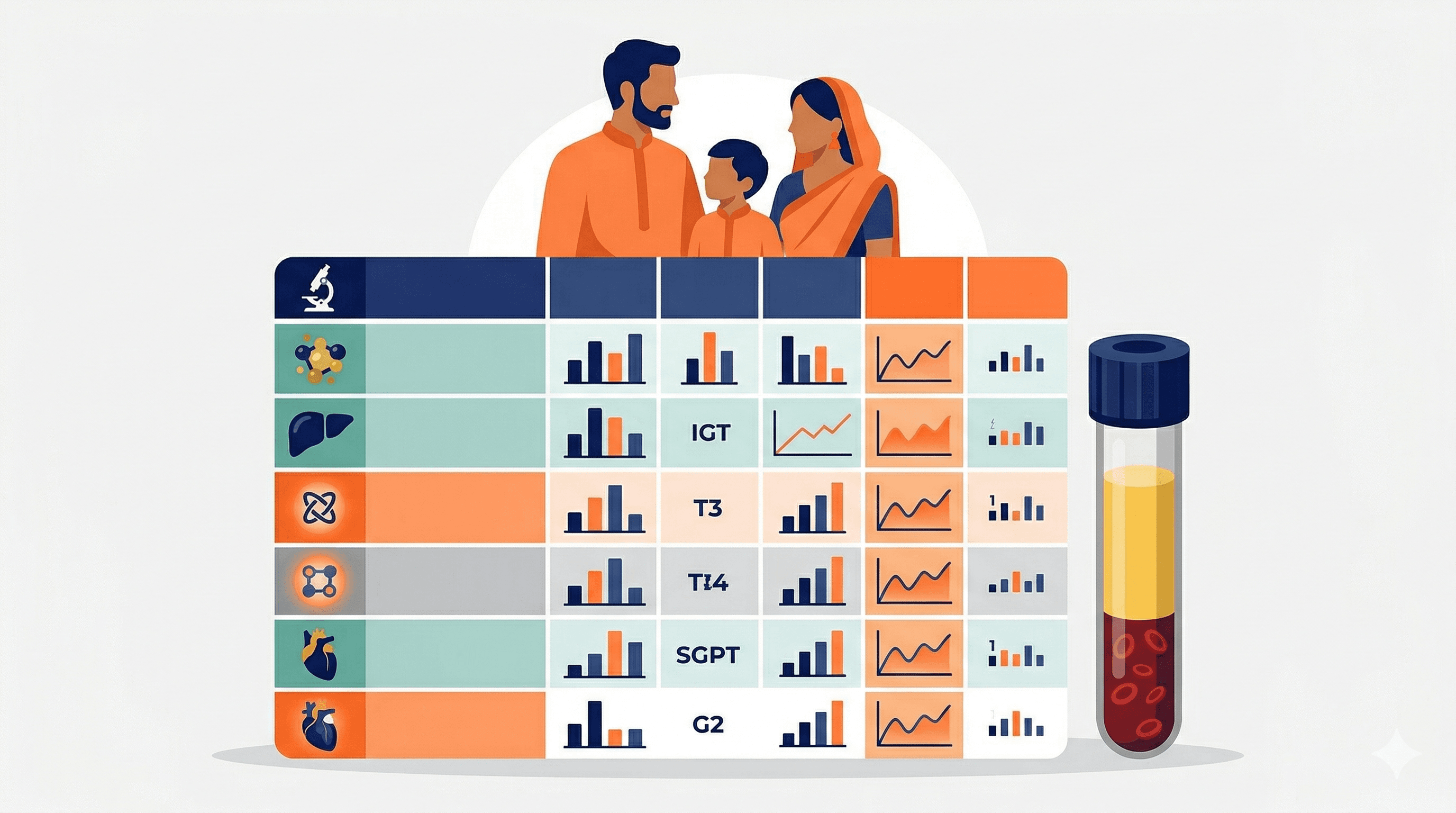
“The OSH Code's annual health check-up mandate is a watershed moment for Indian workplace health. For the first time, preventive screening is not a corporate perk — it is a legal obligation. Employers who invest in early detection today will see reduced absenteeism, lower insurance claims, and a healthier workforce tomorrow.”
— Truemark Health Editorial Team, Medically Reviewed by NABL-Certified Professionals
The Policy Shift: From Reactive to Preventive
On 21 November 2025, India crossed a historic regulatory threshold. The Occupational Safety, Health and Working Conditions (OSHWC) Code, 2020 — part of a sweeping consolidation of 29 central labour laws into four unified Labour Codes — became fully operational. Among its most consequential provisions: every employer must now provide free, mandatory annual health check-ups to all employees aged 40 years and above.
This is not a voluntary wellness perk. It is a statutory compliance obligation, backed by penalties including fines up to Rs 3 lakh for first-time violations and imprisonment of up to two years for violations resulting in worker fatality.
The mandate represents a fundamental shift in Indian labour law — from a reactive framework that responded to workplace accidents and occupational disease after the fact, to a proactive regime that places preventive healthcare at the centre of employer responsibility.
The Legal Framework: Section 6(1)(c) and Rule 6
The statutory anchor for this mandate is Section 6(1)(c) of the OSHWC Code, 2020, which requires every employer to "provide such annual health examination or test free of cost to such employees of such age or such class of employees of establishments or such class of establishments, as may be prescribed by the appropriate Government."
This provision empowers both the Central and State Governments to prescribe which employees, what age thresholds, and which classes of establishments must comply. The Occupational Safety, Health and Working Conditions (Central) Rules, 2020 — specifically Rule 6 — operationalise this mandate, requiring factories, docks, mines, and building/construction establishments to arrange free annual medical examinations for eligible workers.
The original draft rules proposed the age threshold at 40 years. The Central Rules as notified set it at 45 years for specific high-risk sectors. However, multiple state governments have adopted the 40-year threshold in their rules, and the broader statutory language of Section 6(1)(c) establishes this as the widely followed standard.
Who Is Covered Under the Mandate
The scope of coverage is broad and non-negotiable. Permanent employees aged 40 and above are mandatorily covered. Contract workers aged 40 and above are equally included — there is no exemption based on employment type. Workers in hazardous processes are covered regardless of age under Section 82 of the Code. Mine workers require pre-employment and periodic examinations at all ages. Plantation workers exposed to insecticides, pesticides, chemicals, and toxic substances must receive periodic medical examinations irrespective of age.
The Code applies to establishments with 10 or more workers, encompassing factories, mines, plantations, construction sites, docks, and other notified establishments. While Rule 6 currently targets factories, docks, mines, and construction, the broad drafting of Section 6(1)(c) means that State Governments can extend coverage to IT/ITES companies, service-sector offices, and other private-sector establishments through future notifications.
All examinations must be conducted by a qualified medical practitioner, with medical certificates furnished to both employer and employee. No cost-sharing, no reimbursement models, no employee co-pay — the employer bears the full cost.
Why This Matters: India's NCD Crisis
The timing of this mandate is not coincidental. India is in the grip of a non-communicable disease (NCD) epidemic that is devastating its working-age population. NCDs account for 65% of all deaths in India (WHO, 2019), up from 37.9% in 1990 — a near-doubling in three decades.
Approximately 5.8 million Indians die from NCDs every year — heart disease, stroke, diabetes, cancer, and chronic respiratory diseases. One in four Indians faces the risk of dying from an NCD before age 70. Diabetes prevalence is projected to rise from 40.9 million to 69.9 million by 2025, with obesity expected to affect 52.1 million by 2030. Cardiovascular disease alone is projected to become the leading cause of death (37%) in India by 2030.
The four behavioural risk factors driving this crisis — unhealthy diet, physical inactivity, tobacco use, and harmful alcohol consumption — are amplified by rapid urbanisation, sedentary work cultures, and workplace stress. Employees above 40 represent the demographic where these lifestyle risks compound into clinical conditions: hypertension, Type 2 diabetes, early-stage cardiovascular disease, and metabolic syndrome. Annual health screening at this inflection point enables early detection and intervention, before conditions escalate into emergencies, disability, or death.
What the Annual Health Check-up Must Include
While the Code empowers the appropriate government to prescribe specific parameters, the standard annual health examination for employees aged 40+ is expected to cover a comprehensive set of screenings. These include complete blood count (CBC) and blood chemistry panel, fasting blood glucose and HbA1c for diabetes screening, lipid profile for cardiovascular risk assessment, and blood pressure monitoring for hypertension detection.
Additionally, liver and kidney function tests (LFT and KFT), chest X-ray for workers in dust or chemical exposure environments, ECG for cardiac screening in at-risk individuals, BMI and general physical examination, and vision and hearing tests — particularly for factory and construction workers — are part of the standard screening protocol.
For workers in hazardous processes, occupational disease-specific screening as applicable under Section 82 is mandatory. Pre-employment and periodic medical examinations apply irrespective of age for these workers.
Penalties for Non-Compliance
The OSHWC Code introduces a tiered penalty structure under Chapter XII that makes non-compliance financially and legally punitive. For a first offence under general provisions, the fine ranges from Rs 2,00,000 to Rs 3,00,000. Continued violations attract an additional Rs 2,000 per day until compliance is achieved. Repeat offences within five years carry fines of up to Rs 5,00,000.
Non-maintenance of health examination records itself carries a penalty of Rs 50,000 to Rs 1,00,000. Hazardous process violations can result in fines up to Rs 5,00,000 plus imprisonment of up to two years. Violations resulting in worker death attract fines ranging from Rs 5,00,000 to Rs 20,00,000 plus imprisonment of up to two years.
Repeat offenders face imprisonment of up to three months, a fine extendable to Rs 2,00,000, or both. The Code also allows compounding of offences at 50% of the maximum fine for penalty-level violations and 75% for criminal offences. Courts may direct that a portion of the penalty be allocated to a Social Security Fund for the benefit of unorganised workers.
The Compliance Gap: Industry Readiness Is Low
Despite the legal mandate being operational since November 2025, industry preparedness remains critically low. Only 20% of Indian companies were offering regular employee health check-ups prior to the mandate. Over 70% of employees across sectors have at least one lifestyle disease risk factor. Current industry participation in health screening averages just 35% — a figure that will fall drastically short during compliance audits.
As of March 2026, only Gujarat and Arunachal Pradesh have formally notified their State Rules under the OSH Code. All other states remain in the drafting or finalisation stage. However, the compliance clock is already running — the Code is operational at the Central level, and the Ministry of Labour and Employment published an official FAQ on 13 March 2026 clarifying employer obligations.
Mid-2026 compliance audits are anticipated. Employers who have not established screening programmes will face enforcement action.
What Employers Must Do Now
Immediate action is essential. First, audit your workforce demographics — identify all employees aged 40 and above across permanent, contractual, and gig categories. Second, establish a screening programme by partnering with NABL-accredited diagnostic labs or empanelled hospitals. The check-up must be provided, not merely offered as a reimbursable benefit.
Third, set a compliance calendar. Rule 6 requires examinations to be completed within 120 days of the start of each calendar year — for 2026, this window closes by April 30, 2026. Fourth, maintain records of all health examinations conducted, certificates issued, and employee participation. Fifth, budget for it — factor health screening costs into HR and compliance budgets.
If your operations involve hazardous processes, extend mandatory medical examinations to all workers regardless of age under Section 82. Most critically, track participation rather than just availability — a 35% participation rate will not survive an audit.
The Broader Significance
The OSHWC Code's health check-up mandate is part of India's broader alignment with the WHO Global Action Plan for the Prevention and Control of NCDs (2013–2030). India was the first country to adopt a National Action Plan with specific targets aimed at reducing premature NCD mortality by 25% by 2025.
Under the National Programme for Prevention and Control of Cancer, Diabetes, Cardiovascular Diseases and Stroke (NPCDCS), the government has established 677 NCD clinics at the district level, 187 District Cardiac Care Units, and 5,392 NCD clinics at the Community Health Centre level. The workplace mandate extends this preventive infrastructure into the private sector, creating a dual public-private health screening ecosystem.
For the first time, Indian labour law recognises that an employee's health is not merely their personal responsibility — it is an occupational condition that the employer has a statutory duty to monitor, protect, and invest in. The shift from reactive to proactive, from accident response to health prevention, from optional wellness programmes to enforceable compliance — this is the new baseline.
Frequently Asked Questions
What is the OSH Code mandatory health check-up rule?
Which employees are covered under the mandatory health check-up?
Who pays for the annual health check-up?
What are the penalties for not providing mandatory health check-ups?
Does this apply to IT companies and private offices?
What tests are included in the annual health check-up?
What is the deadline for compliance in 2026?

Truemark Health Editorial Team
Medically Reviewed by NABL-Certified Professionals
The Truemark Health Editorial Team produces evidence-based health content reviewed against current clinical guidelines, ICMR standards, and peer-reviewed research. Every article is vetted for medical accuracy before publication.
View Medical Review Board →